

Refuse
Usawa Literary Review Issue 15 is now live.


Dear readers,
Refuse is here.
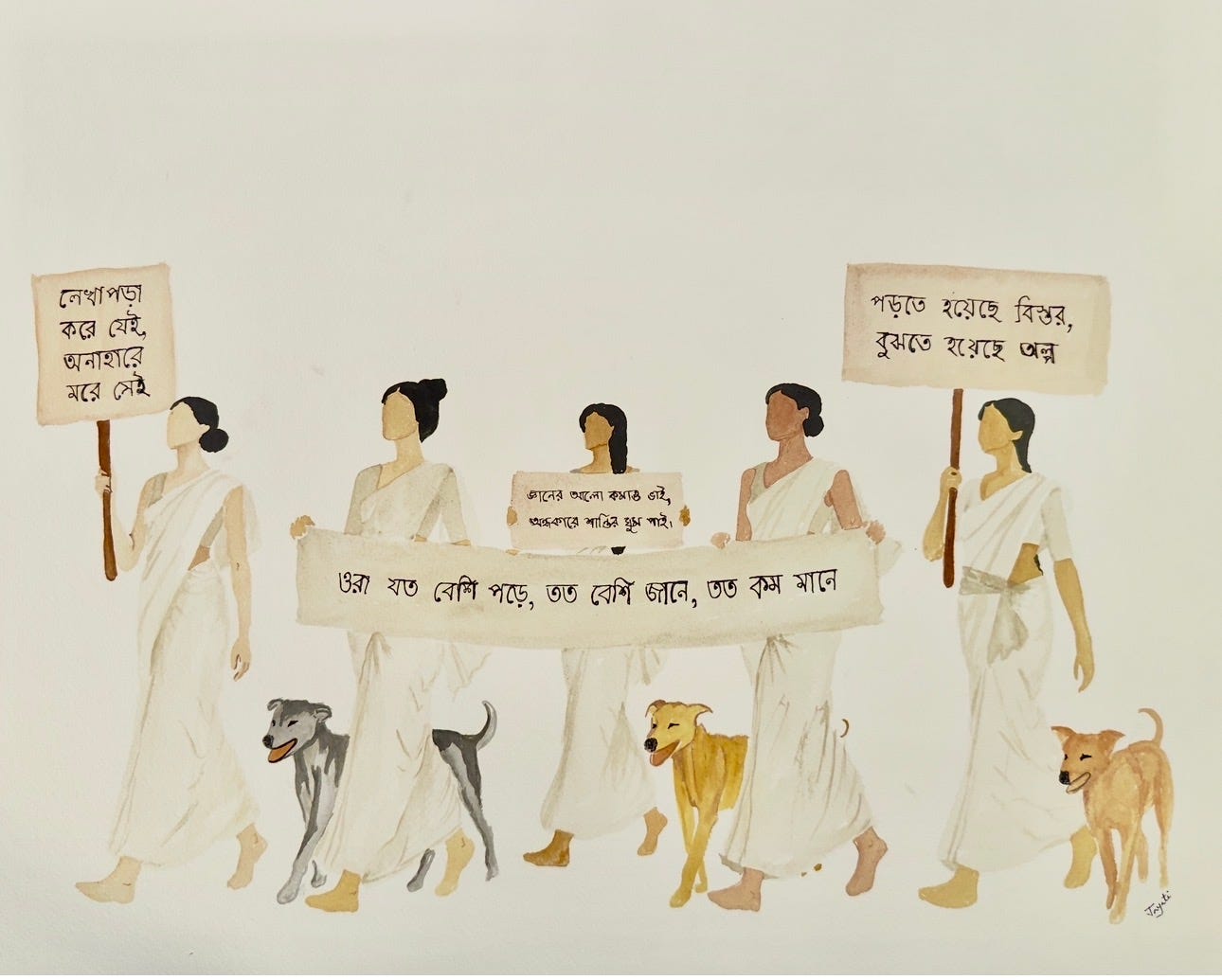
The fifteenth issue of Usawa Literary Review arrives at a moment when language, resistance, and imagination feel inseparable. Bringing together poetry, fiction, essays, translations and visual art, Refuse examines what it means to reject the systems that seek to define, diminish, or discard us and to imagine new ways of being together despite everything.
This issue is dedicated to the memory of S. Anitha, who scored 1176 out of 1200 in her Tamil Nadu state boards, was shut out of medical college by NEET regardless, and took her own life nine days after the Supreme Court closed the last door open to her state.
In her editorial, Editor-in-Chief Smita Sahay reflects on eight years of building an independent feminist literary magazine, on survival as resistance, and on the necessity of refusing the narratives that diminish our humanity.
In an ecosystem where independent literary spaces disappear with alarming regularity, survival itself has become a political act.
But survival alone has never been our dream. Our dream remains to reimagine. That is why Refuse felt like the only possible theme for this issue — one that holds, among much else, a new translation of Faiz’s Intesaab, Katherine Shehadeh’s refusal of the flag, and Chidimma Ewelukwa’s walls that finally refuse to keep a powerful man’s secrets. Women have been both refuse and refused, as have so many marginalised communities. Vermin. Waste. Filth. Cockroaches. Mary Douglas called dirt “matter out of place”; Kristeva called it the abject — what a society expels to know its own edges. Caste had already built a doctrine of purity and pollution on the same logic, long before either of them wrote it down. That is what we have been called, and that is how dignity has been denied. So we dissent. We create. We love.
-Smita Sahay
Editor-in-Chief
Smita’s editorial also looks back at the recent student-led protests that reshaped the country’s political imagination. When a sitting judge called unemployed youth “cockroaches” and “parasites,” the insult was turned on its head as the Cockroach Janta Party reclaimed the slur with humour, satire and some of the year’s most memorable political memes.
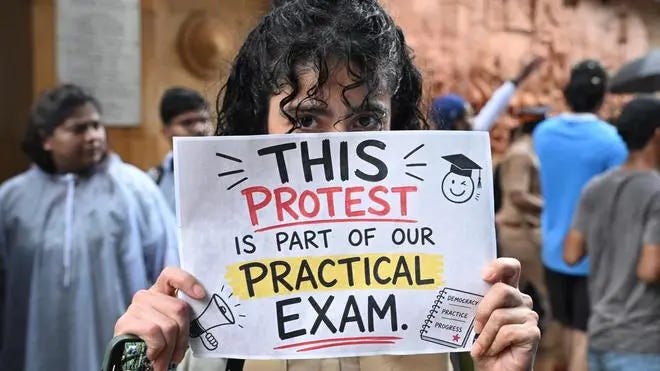
These protests were about more than taking to the streets. Alongside the marches were quieter acts of courage: strangers sharing food, medicines and phone chargers, creating safe spaces for women protesters, and daily-wage workers sacrificing precious income to stand beside students they had never met. These moments show how dissent grows through care as much as resistance making room for a more hopeful idea of democracy.
What this generation has enabled is the reimagination of our country. For once, India does not feel like an abstraction invoked in speeches or campaigns. This protest is India. Ambedkar’s India — not the India of borrowed constitutional language, but the one he warned we would lose without social democracy beneath the political kind.
Every authoritarian project shrinks collective imagination through fear; every act of dissent enlarges it. We refuse to accept fear as the price of citizenship.
-Smita Sahay
Editor-in-Chief
From decaying bodies to ordinary objects ready to be disposed off, through a cornucopia of poems, stories, and essays, we invite you to read Refuse as creation of solidarity and the radical possibility of imagining otherwise.
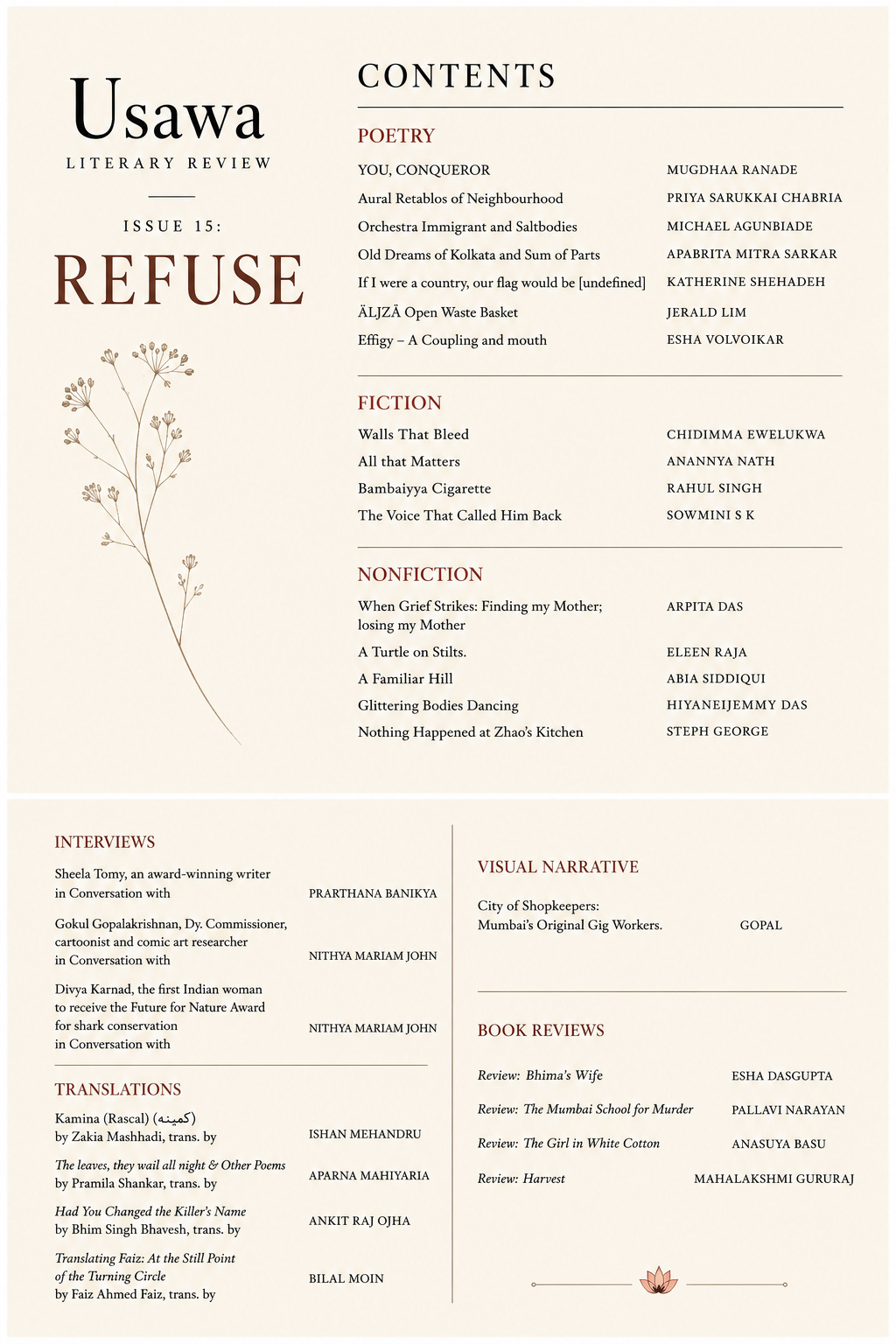
Thank you for reading and for supporting independent feminist publishing. We hope Refuse stays with you long after you’ve finished reading, and we’d love to hear which pieces resonate with you.
If you enjoyed this issue, consider sharing it with a friend or supporting Usawa’s work. Your support helps us keep this momentum going and continue creating space for independent feminist writing, art, and criticism.
 | A guest post by
|
 | A guest post by
|